
“How dare they take my Skype!”
For one older adult, every tech triumph seems to come with a software update.
Written by Jordan Fish
In a cozy apartment decorated for fall, including some fabulous toilet paper roll turkeys, I sit across from Lori Hudson, a 66 year old resident of an Independent Living Centre.
As part of our conversations at the Digital Bridge Society, we’re speaking with older adults like Lori to understand their experiences with technology; the triumphs, the frustrations, and everything in between.
She moved in about a year ago with her husband, Bob, and she’s thrilled with her experience so far at the centre. A point of high praise are the social activities.
“There’s arm chair travel, cribbage tournaments, and chicken foot dominos,” she boasts.
I give her a questioning look, and she clarifies that arm chair travel means “picture slides of each other’s holidays we share,” and the cribbage tournaments are “set up where you play a game and then you switch partners…it’s like speed dating without the stress,” and chicken foot dominos “is like regular dominos but you try to make the shape of chickenfoot with them”.
Lori grew up in Whitehorse and later studied English and Anthropology at the University of Victoria, where she went on to work in museums as a curator and registrar. She moved around B.C until she met her husband in Smithers, they met because he had to help her with the photocopier at work, and the rest is history. Now, they’ve settled by the sea and couldn’t be more pleased.
Though you can find Lori happily competing in a cribbage tournament, singing at Song Circle, or helping a friend get a triple letter score at the Scrabble Club, there is one place you will likely not find her: the computer room in her home.
“I try to avoid technology if at all possible.”
She emphasizes that technology has never been her friend, it’s been a haphazard relationship from the get-go.
“It’s why I liked my husband,” she says with a chuckle. “He’s an accountant, which meant he was very good with the machines. He actually taught me how to use a computer.”
The only other tech training she’s had was learning to use a typewriter; a gift from her parents when she was in university. That’s not to say she hasn’t tried to build her digital skills further.
“My husband keeps saying to me that computers can’t think. They only do what you tell them. Which worked up to a point, but now that we have machines that can think, that’s terrifying to me.”
When asked if there is a specific aspect of technology that makes her feel uneasy, the reply is instant.
“Well, [online] banking is a real mystery to me. I prefer talking to a teller. If I do any banking, I have to do it in-person. I find machines very intimidating because I don’t understand how they work.”
To Lori, having digital skills is about independence, having the capability to check your finances on your own.
“You don’t want to have to always rely on somebody. You should be able to take responsibility for your own finances, and at this point I don’t…so I’m thinking having more computer skills would be a good idea.”
The anti is turned up a notch when she shares that she and her husband share a computer.
“I’m not sure if what I’m doing will undo something. That’s important - I would be more comfortable doing more on my own computer, so I wouldn’t mess with his stuff.”
While online banking may be her Everest, she has had some technological wins (even if they were recently snuffed out).
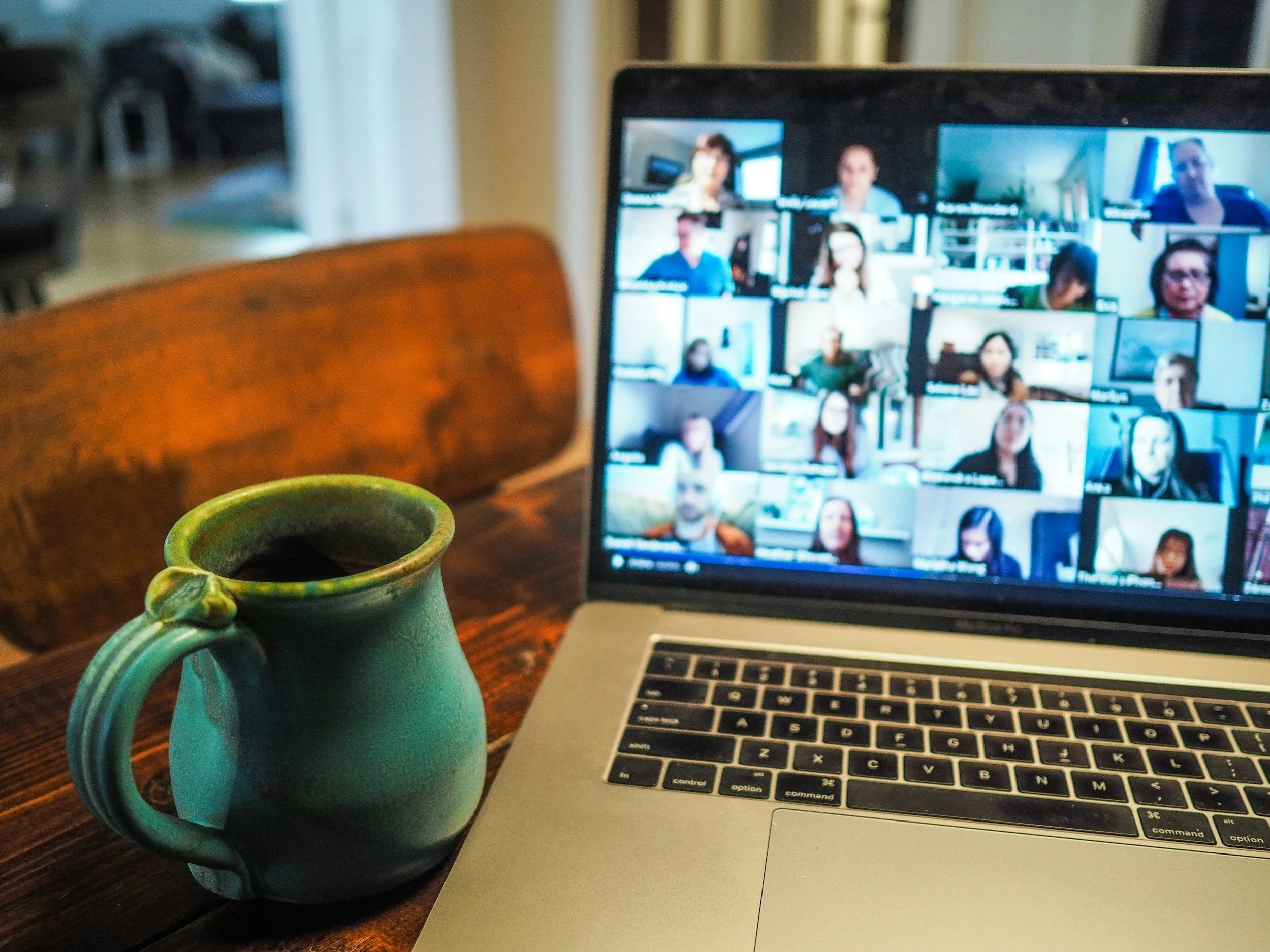
“I love Skype, but they took it away! But I loved it!”
What made the sudden Skype ghosting so bitter was not only losing a tool that facilitated 1-on-1 connections, but that she didn’t know of an easy alternative.
“I thought, ‘How dare they! How dare they take my Skype!’”
Thankfully, Lori is an avid emailer so she’s able to stay connected using her typewriter skills. Unfortunately, that also comes with some cyber scares.
“Email is my favourite, though I’m worried that someone else is reading my emails. We have been hacked, and it was terribly violating. As a senior we’re more vulnerable. If [scammers] phone me, I’m actually rude to them so they know I'm not an easy target. I’ve even lied to them and told them I’m tracking them to freak them out.”
While fabricating tales to stress out scammers is an admirable approach (note: this strategy is not endorsed by the Digital Bridge Society - mainly for legal reasons), Lori finds the mission of the Digital Bridge Society intriguing.
“I think sharing experiences is probably a good thing because it’d make people realize they’re not alone. Their concerns are similar to others and there may be solutions that can be found between people. It could be a wonderful way to get seniors out into the community, and young folks a chance to get to know seniors, and share stories. And defeat loneliness, not just for the seniors but also for the younger folks. It’s a win-win.”
Her story captures what we hear so often; it’s not just about learning tech, it’s about feeling seen and supported without the embarrassment of not knowing something.
She does, however, have one concern.
“If there is a meeting between seniors and younger people, there needs to be serious vetting of the volunteers. I don’t want a senior to be taken advantage of.”
It's an incredibly valid concern to raise. I assure her that all volunteers would require a criminal record check and training. The DBS team is currently developing onboarding manuals for volunteers that touches on both tech knowledge and best practices for supporting older adult learners.
As our chat comes to a close, it becomes clear that while her love for technology may never match her love story, Lori’s openness to learn, and to laugh about it, is exactly what building digital bridges is all about.
